The NFTNYC conference brought the global community of NFT fanatics together in New York City, with 1,500 speakers and 16,000 attendees, I reflect upon the action with a balance of praise and criticism.
Introduction
The fourth annual NFTNYC conference took place last week between June 21-23 in the heart of Times Square, New York City. Purported to be the largest of its kind within the NFT space, this year’s event was sponsored by Polygon Studios and Moonpay, with the purpose of giving prominence to all things non-fungible.
In the days leading up to the three-day event, the anticipatory momentum and influx of people was arguably captured and capitalized by the plethora of NFT satellite events, community meetups, and impromptu gatherings hosted throughout the city.
Many New Yorkers, and residents of neighboring states, made the arduous journey to the Big Apple without a conference ticket, and solely with the intention of immersing themselves in the artistic culture, soaking up the social vibrancy, and solidifying social connections formed in the Web3 world.
These side events, or derivates to use the appropriate market terminology, were broadly regarded as the places to be – often exclusive to the NFT holders, they served as authentic melting pots for the convergence of artists and their communities.
For the NFT industry at large, the growth of this offshoot ecosystem beyond the confines of the conference will vastly support the sustainability and health of the space, and its participants for the long-term future.
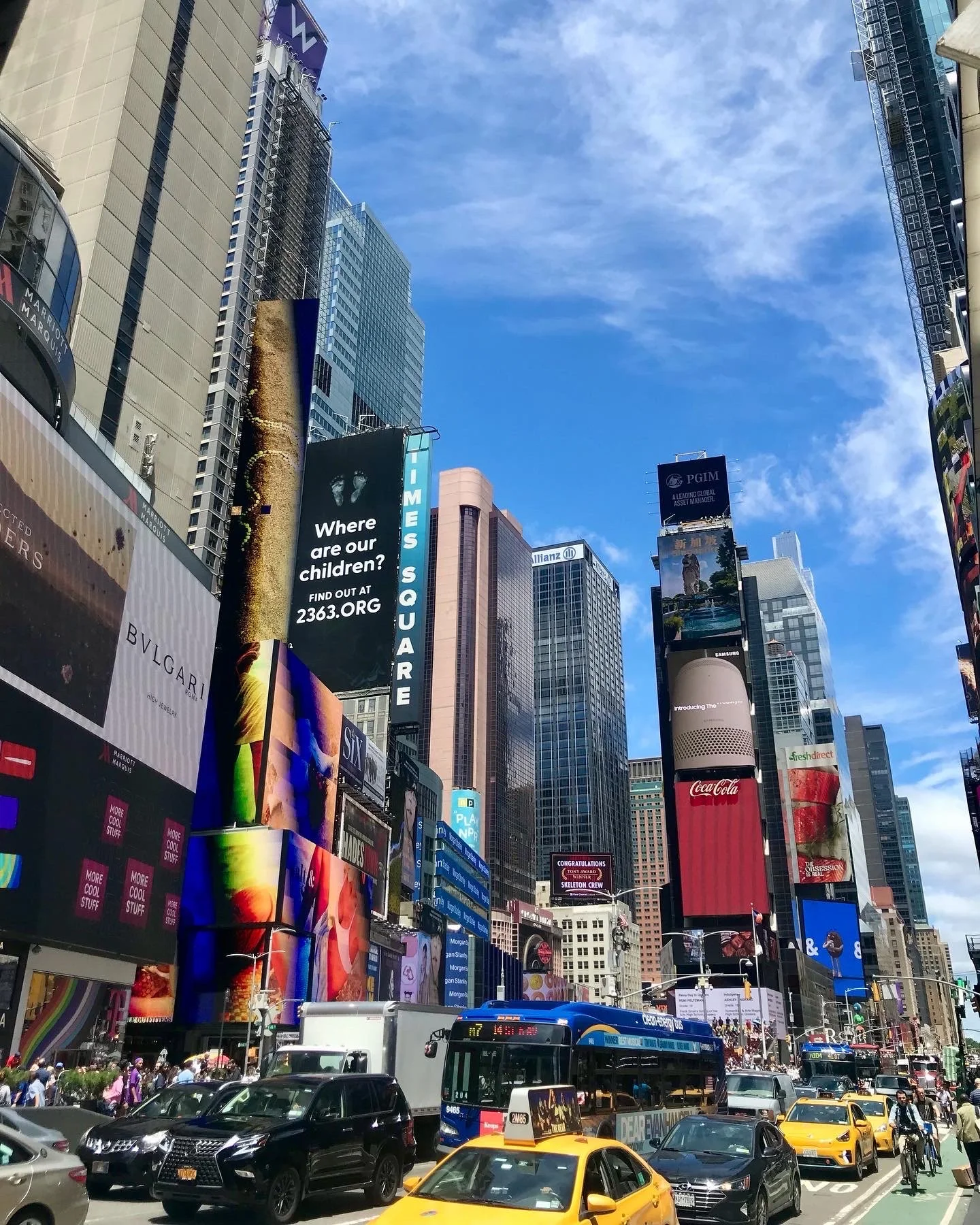
Pictured: Times Square. Source: Tom Farren
The Panels
As Big Apple virgins gawked up in astonishment at architectural skyscrapers like miniature figures in a cloudy 75 degrees Fahrenheit model town, becoming swallowed up by the city’s chronic appetite for consumption, it was appropriate that the phrase ‘overwhelming’ was commonly equated to the experience.
After checking into their overpriced Airbnb’s, exhaustingly waking at 6am from jetlag, grabbing an iconic New York bagel and takeout coffee, and Ubering through twenty minutes of raging traffic to the venue, the jpeg enthusiasts could finally begin their NFTNYC journey.
The conference kicked off in similar fashion. As attendees and VIP speakers collected their lanyard passes, merchandise giveaways attracted frenetic crowds of degenerates in scenes reminiscent of covid-induced supermarket dashes.
Except, instead of toilet roll and semi-skimmed milk, the items of necessity here were Polygon tote-bags, and Holograph rainbow long-sleeved tees.
This year’s conference was intended to champion the ethos of diversity, with co-founder Jodee Rich sharing his anticipations for a “very diverse and eclectic audience” in conversation with Cointelegraph in the days prior to the event.
Unfortunately, this admirable vision was lost in practical translation as an obsession for quantity, and value-for-money on an $849 ticket, overwhelmed any notion of inclusivity. Panels seldom reached half-capacity, as the bounty of 1,500 speakers attracted a mere passive interest from the reported 16,000 in attendance.
A hectic, two-places-at-once scheduling, meant that attendees found themselves victims of choice. Hosted across seven locations, predominately the Marriott Marquis in Times Square, the conference saw people aimlessly wondering through the busy streets, anxiously pivoting on Google maps to find the blue arrow of direction without a physical map to guide them.
Other venues such as the Radio City Music Hall and Edison Ballroom provided a more comfortable spacial environment, but the speakers, with the greatest respect, were a tad disappointing when sharing antiquated perspectives on their professed niche in the market.
Alongside this, panels typically lasted for ten-to-fifteen minutes which compounded the feeling of haste, and presumably suppressed the quality of conversation that speakers felt comfortable having.
The 1,500 speakers were granted their positions on the podium following acceptance in an open application system. Upon reflection, a more selective, curated list of experts could have been complied, whilst retaining the values of ethnic, gender, and philosophical diversity.
A Twitter thread by ANONYMOUS (@anonsvoice) gained social notoriety after lambasting the conference’s organization, staffing incompetency’s and speaker selection, among other aspersions, before shrewdly transitioning into an advocacy pitch for their project, SaveWeb3.
In balance, the conference succeeded less in identifying and curating excellence, and more in spotlighting an excess of mediocrity.
The main conference hall, Flow Theater on Level 5 of the Marriott Marquis, provided some rest-bite from this conclusion, with impressive panel discussions from Gitcoin’s Azeem Khan on Music NFTs, Head of Communications at Rarible, Masha Vyazemskaya on The Creator Economy, and Senior Product Manager at Microsoft, Taylor O'Malley on Redefining Brand Identities with NFTs, among others, but these triumphs were few and far between.
The NFTNYC award show followed much of the same script. Allotted for two hours, and wrapped up in one, reports suggested only five of the fifty-six winners were in attendance to claim their prize. And those who did show face, were only afforded a short minute to deliver their acceptance speech.
In that sense, the awards felt more like a token gesture to incite social debate on Twitter, rather than a genuine attempt to commemorate the honorable work of artists, creators and platforms alike.
All that being said, acknowledgement and gratitude must be shared to NFTNYC for the monumental foundation it once again provided to the NFT space, as well as to the team members and volunteers who served with good-willed intentions to support the NFT movement.
Without such central point of focus, the satellite ecosystem, and community relations simply would not have flourished as it did throughout the week.
Related: NFT.NYC expecting ‘diverse and eclectic audience’ to drive utility narrative of NFTs
The Famouses
Outside the conference, millions of dollars were spent on parties, open-bar events, and star-studded A-list musicians to reward holders with in-real-life (IRL) utility benefits.
Pop queen Madonna memorized crowds with a headline show at the World of Women event by performing songs from her new album, Finally Enough Love. Only recently on June 13 did the self-pronounced ‘Queen of Pop’ announce her entrance into the WOW ecosystem, changing her Twitter profile picture (pfp) to flaunt her new avatar purchase.
At the highly-anticipated Bored Ape Yacht Club’s Ape Fest, hip-hop icons Snoop Dogg and Eminem brought their Superbowl half-time show energy to Pier 17 of Manhattan, premiering a new Ape-themed track and music video titled ‘From The D 2 The LBC’ which has racked up 10.6 million YouTube views to-date.
Popular CryptoPunks rapper Spottie WiFi opened up the duos set with a new three-track E.P of his own titled ‘The Ape Tape’ with an accompanying NFT drop, while Lil Wayne and comedian Amy Schumer also joined the stellar three-day lineup.
If there were a community choice award given out for the best event of NFTNYC, Cool Cats Cooltopia would have definitely made the shortlist. Billboard advertisements splattered the city in an anticipatory prelude, and the event itself did not disappoint.
A room filled with fun-themed treasure boxes, a fur is lava adventure course, milk coin rewards, a marshmallow mountain, and an upside-down Andrew Wang. You asked for IRL utility, well here it is! The Good Knight captured the footage in a montage video shared to Twitter.
Other notable mentions were the Digital Diaspora event hosted by DrifterShoots and Diana Sinclair at Samsung 837, the ONE37pm and VeeFriends’ pop-up café on Hudson Street, the Phantom Party degen cruise hosted by Phantom and Magic Eden, and the TimePieces artist exhibition, among others.
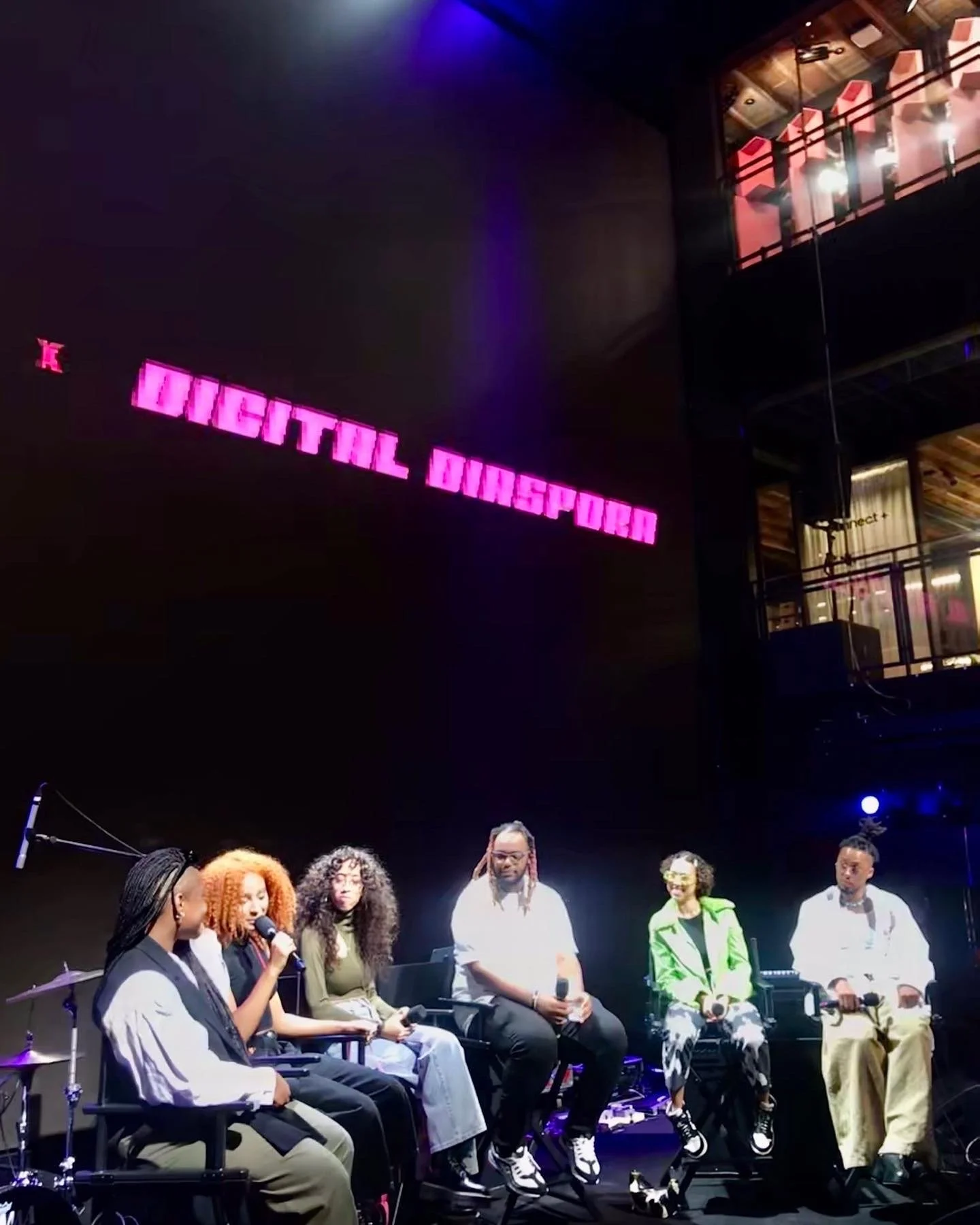
Pictured: The Digital Diaspora Event. Source: Tom Farren
Those expecting the narrative conversation at such events to be dominated by the financial burdens of the bear market were bestowed with relief.
Meeting IRL provided the casual convenience to discuss subjects outside the realm of NFTs - personal life, friends, memories and the like. These events weren’t always a natural habit for introverted personalities, but warm and friendly enough to engage in honest and informative conversations.
Once the dialogue evolved to industry topics, a vibrant atmosphere founded upon commonality of interests overshadowed much of the market gloom, as people shared their visions for a decentralized Web3 utopia.
It was evident that trust will be placed in the hands of those founders who have acquired eminent skills in building successful projects throughout the internet era, and withstood and conquered the adversity of market cycles.
Now more than ever, these traits are a necessity for founders of projects to execute for their communities in the hostile and winter bear market environment to come.
The People
From the viewpoint of cynics and skeptical outsiders, the literal saturation of the term ‘community’ could be deemed as a baseless statement for corporations and projects to fabricate the appearance of bilateral consumer relations and cultivate demand.
In Web2, such claims could have been debated into truth, but the advent of Web3 arrived with a reversal to the linear structure of progress to a model which builds from the ground-up, and community-first.
It’s a transition from geographically disparate, faceless consumers, to unified personable avatars – if that makes any sense.
And this personable nature was something that shone through in interactions with the most popular influencers and “celebrities” within the space. Respecting their privacy, and not feeling the necessity to print names, these individuals were humble, down-to-earth, generous and genuine with their time. They spoke as equals, and peers of a decentralized community.
Attending a conference or seminar on Bitcoin or Ethereum would rarely offer this same experience as the audience demographic largely consists of people with an innate passion for finance and technology.
Whilst these folks would largely be amiable in conversation, crypto has a reputation of attracting tunnel-visioned maximalists whose sole purpose is to glorify the consumer utility and financial prospects of digital assets, often failing to comprehend the true human impact.
On the other hand, the typical NFT audience, such as witnessed at NFTNYC, arrive to the scene from a multitude of different backgrounds and inspirations such as art, culture, gaming, music, sports, social media, the climate, and more, as well as the underlying interests in finance, and technology.
And it’s this diversity that makes the NFT space truly unique. The established culture of quirks and idiosyncrasies, inspired by Reddit memes and internet jpegs, can be a difficult barrier-to-entry for some traditionalists to navigate. This was a matter brought into sharp focus by one particular incident during the week.
Adam Bomb Squad’s pop-up store on Grand Street was scheduled as an opportunity for community members to mingle, learn more about the brands history, and potentially pick-up some new merchandise clothing.
However, shortly after commencing, the storefront was ambushed by a crowd of impassioned protestors lofting home-made signs slandering the doctrines of the NFT space.
‘Gods Hates NFTs, ‘Make Fiat Great Again’, ‘Listen to Bill Gates’, and ‘Anti meta-Maskers’ were some of the most defamatory slogans on display as the group’s leader rallied supporters with a repetitive chant of ‘NFTs, not for me’!
The only caveat to this obscure story is that it was fake - a staged marketing campaign carefully calculated by the Adam Bomb Squad team to mock NFT critics, and indirectly promote their project. This moment of self-depreciation in the pursuit of comedic irony perfectly encapsulated the avant-garde nature of the NFT space.
As everyone took their respective journey’s home, a litany of positive coronavirus tests sparked mischievous gags that attendees deserved a Covid POAP — an acronym for proof of attendance protocol which is collected as an NFT — for their physical interaction with others.
The co-founder of The Hundreds and Adam Bomb Squad wrote, “Worst POAP ever”, while Twitter user duke london (@LongLiveTheDuke) wittingly added “proof of a positive”.
First and foremostly, beyond all the degenerate antics and deflated floor prices, NFTNYC was centered around the congregation of people. Solidifying relationships from the Web3 space IRL was a joyous reminder of the balance between digital and physical spaces that must exist for communities to thrive.
As for future events under the NFTNYC umbrella, marketing campaigns have already begun circulating the digital dimension for limited early bird tickets for NFTLondon on November 3-4.
NFTs have entered a new era - for better or for worse. All that is known is when one market cycle concludes, the next chapter of the narrative commences. "The end of the beginning” as Partnerships lead at Joyn.xyz, Aleksandra Artamonovskaja, put it.